

In testimony submitted to the Texas House Public Education Committee, IDRA highlights the benefits of sustained investment in bilingual education and dual language programs for Texas students. The testimony points to research connecting bilingual education with literacy gains, biliteracy development and workforce readiness, and recommends increased funding and stronger support systems for emergent bilingual students.
Resource from the Intercultural Development Research Association (IDRA), a nonprofit advancing education equity.
See PDF version of IDRA testimony May 11, 2026
Dear Chair Buckley and Members of the Committee:
My name is Dr. Chloe Latham Sikes, and I am deputy director of policy at IDRA, an independent, non-partisan non-profit committed to achieving equal educational opportunity for every child through strong public schools that prepare all students to access and succeed in college.
This committee passed historic reforms to bilingual education during the last session. For the first time in over 40 years, this committee invested in the over 1 million emergent bilingual students in Texas public schools by raising the bilingual education allotment from 10% to 12% additional per-pupil funding. This was monumental, since Texas serves one in five emergent bilingual students in the country, and we know that high-quality bilingual education programs are critical to early literacy gains, college and career readiness and workforce development.

While that increase was not part of the final House Bill 2 funding package, it helped establish a foundation for promising work to ensure all Texas public school students can get a quality public education in the language they understand – be that English, Spanish or one of the over 100 languages spoken across the state.
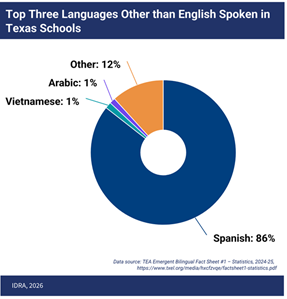
Spanish, Vietnamese and Arabic comprise the top three most frequently spoken languages, but thousands of students in Texas schools also speak Pashto, Urdu, Mandarin Chinese, Gujarati, Swahili and many other languages.
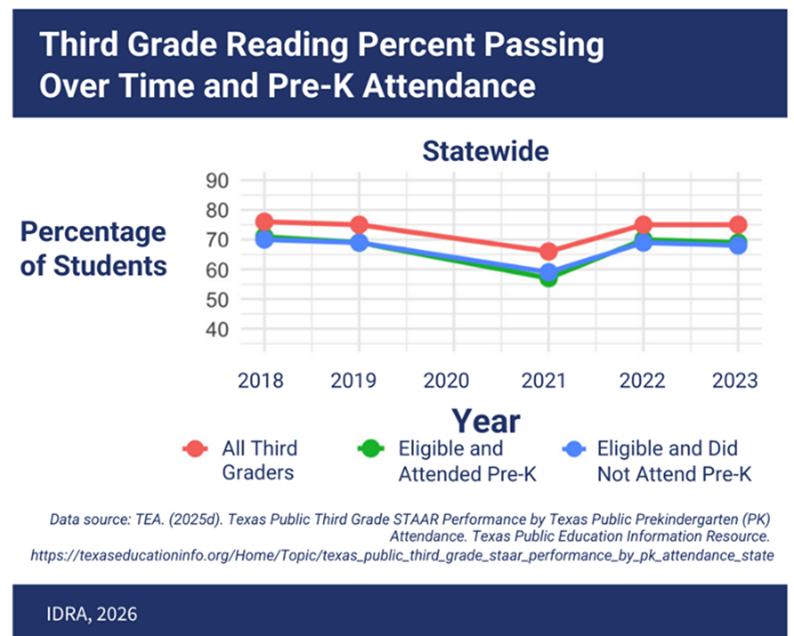
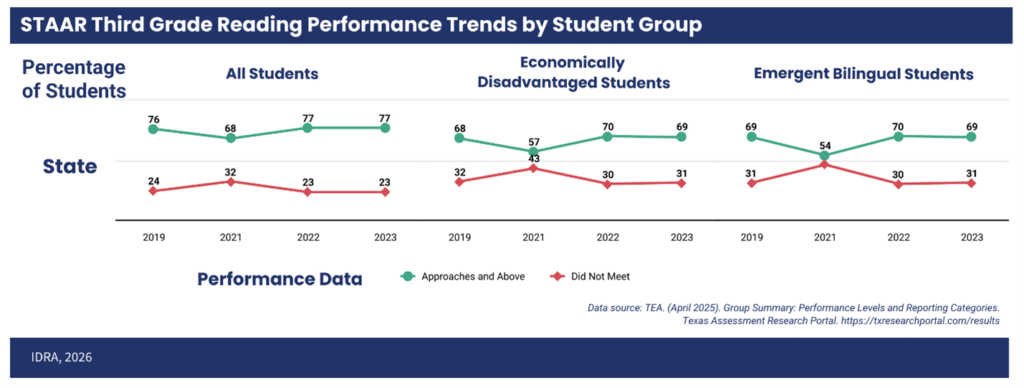
Third grade emergent bilingual students rebounded from post-pandemic levels in 2021 on the STAAR reading exam comparable to their peers statewide (see Perez & Latham Sikes, 2026).
Furthermore, sustained bilingual education programs and expanded pathways to cultivate biliteracy opportunities through high school, such as through the Seal of Biliteracy, position students to graduate with competitive bilingual skills that are needed across business, health care, education and other industries (Latham Sikes & Piñón, 2025).
This committee advanced legislation in the 89th session to support early and consistent investment in bilingual education, support the growth of quality bilingual and dual language programs across the state, and adopt a more inclusive and stronger Seal of Biliteracy recognition for graduating students.
IDRA recommends that this committee consider the following in the 90th legislative session:
IDRA is available for any questions or further resources that we can provide. Thank you for your consideration. For more information, please contact Chloe Latham Sikes, Ph.D., deputy director of policy, at chloe.sikes@idra.org.
Latham Sikes, C., & Piñón, L. (October 2024). The Path to a Stronger State Seal of Biliteracy – Advancing Texas Student Success through Bilingualism and Biliteracy – IDRA Policy Brief. IDRA.
Perez, A. & Latham Sikes, C. (January 2026). Effective Investment in Early Education: How Texas School Districts Use the Early Education Allotment and Its Impact on Student Learning – IDRA Research Brief. IDRA.
TEA. (2025). Emergent Bilingual Students in Texas Fact Sheet #1 – Statistics. Texas Education Agency.
IDRA is an independent, non-profit organization led by Celina Moreno, J.D. Our mission is to achieve equal educational opportunity for every child through strong public schools that prepare all students to access and succeed in college.
What is bilingual education in Texas public schools?
Bilingual education programs help emergent bilingual students learn academic content while developing proficiency in English and their home language.
Why does IDRA support increased bilingual education funding?
IDRA cites research showing that high-quality bilingual education programs improve literacy, college readiness and workforce preparation for students.
What is the Seal of Biliteracy?
The Seal of Biliteracy is a recognition awarded to graduating students who demonstrate proficiency in two or more languages.
How many emergent bilingual students are enrolled in Texas schools?
The testimony notes that Texas serves more than 1 million emergent bilingual students who speak over 100 languages statewide.
What recommendations does IDRA make to Texas lawmakers?
IDRA recommends increasing bilingual education funding, strengthening educator training and technical assistance, expanding Seal of Biliteracy pathways and fully funding pre-kindergarten programs.
Why are dual language programs important?
The testimony explains that sustained bilingual and dual language programs help students develop biliteracy skills that support success in education, business, health care and other industries.