

State-Sanctioned Corporal Punishment Has No Place in Schools
Corporal punishment is still legal in U.S. schools, disproportionately harming Black students and students with disabilities. This article outlines why the practice must end and how communities can take action to create safe, equitable learning environments.
Key takeaways
- Corporal punishment remains legal in 20 U.S. states and affects tens of thousands of students.
- Black students and students with disabilities are disproportionately subjected to physical punishment.
- Research shows corporal punishment harms students and does not improve behavior.
- Physical punishment undermines safe, supportive school environments and student well-being.
- Communities can take action to end corporal punishment and promote equitable discipline practices.
Resource from the Intercultural Development Research Association (IDRA), a nonprofit advancing education equity.
Every student deserves a learning environment that fosters growth and belonging, where they are safe and free from harm. But, such a learning environment is not possible if corporal punishment is allowable under the guise of “discipline.”
Twenty states still permit corporal punishment in schools, where 70,000 children have been hit during a single school year.
Each year, we recognize International Day to End Corporal Punishment as a call to action for advocates, educators, students and community to come together to support the end of this outdated, violent practice.
As the data show, Black students disproportionately receive corporal punishment in schools, as do students with disabilities, making this a racial justice and educational equity issue.
Data indicate that corporal punishment is used on children as young as 3 years old. Any student receiving corporal punishment is one student too many.
Here are five facts about corporal punishment you can talk to your family and friends with about today that are important to highlight:
- Corporal punishment is the deliberate infliction of physical pain, sometimes leading to injury.
- Corporal punishment includes paddling, spanking, slapping and more.
- Corporal punishment hurts students physically, emotionally and academically.
- Some student groups are more likely to be hit, including Black students, boys, and students with disabilities.
- There is no evidence that hitting children improves behavior. In fact, research shows corporal punishment is ineffective and often counterproductive, increasing behavioral challenges while undermining safe, supportive school environments.
New Video on Corporal Punishment!
In a forthcoming IDRA Classnotes Podcast episode, IDRA’s Aurelio Montemayor, M.Ed., and Morgan Craven, J.D., examine why physical punishment persists in schools, the lasting harm it causes, and what communities can do instead.
Through a conversation on restorative practices, family engagement and culturally-sustaining discipline, they explore how schools can move away from corporal punishment and toward learning environments rooted in dignity, accountability and student well-being. The podcast episode will drop soon, but you can watch the video version on our YouTube channel. (16 min)
Violence Against Children is Not OK
It’s important to recognize that in any other context, hitting another person would be considered assault. Why do we continue to do it to children?
![[Graphic image text] The use of physical punishment is a cruel, ineffective practice that persists in schools, even though it is banned in other contexts. If an adult hits another adult… they could be charged with assault under state penal codes. If a child hits another child… they are taught that such violence is wrong and may even be suspended or arrested in school under state law and the school district’s own code of conduct. If a federal prison guard paddles an incarcerated person… that guard’s behavior could be punished for violating rules against the use of corporal punishment established by the U.S. Department of Justice. If an adult hits a child,... in many states’ foster systems, and juvenile justice departments, the adult would be in violation of regulations prohibiting corporal punishment in those state systems. It’s time to end corporal punishment in schools! https://idra.news/EndCorpPunishment](https://idraseen.org/wp-content/smush-webp/2026/04/New-2026-version-Corporal-Punishment-contexts-1024x1024.png.webp)
Corporal Punishment in U.S. States & School Districts
Though corporal punishment of children has been banned in 68 countries, hitting, paddling, spanking, slapping and other forms of physical punishment remain legal in K-12 schools in 20 U.S. states.
![[Graphic image text] Corporal punishment is still permitted in schools in 20 U.S. states. Corporal punishment is expressly allowed by law in 15 states. It is neither allowed nor prohibited in the law in five states, exposing children in these states to harm. List - Corporal Punishment Allowed by Law: Alabama, Arizona, Arkansas*, Florida, Georgia, Kentucky*, Louisiana*, Mississippi*, Missouri, North Carolina**, Oklahoma*, South Carolina, Tennessee, Texas, Wyoming. Law Neither Expressly Allows Nor Prohibits: Connecticut, Indiana, Kansas, Maine, South Dakota. *except for some students with disabilities. ** allowed under state law but banned in all school districts. ***Most of these states report zero uses of corporal punishment in schools.](https://idraseen.org/wp-content/smush-webp/2026/04/Corporal-punishment-in-20-states-table-2025-1024x444.png.webp)
IDRA’s map and data dashboard enable you to view the rates of corporal punishment by the states and school districts that still use this type of disciplinary action.
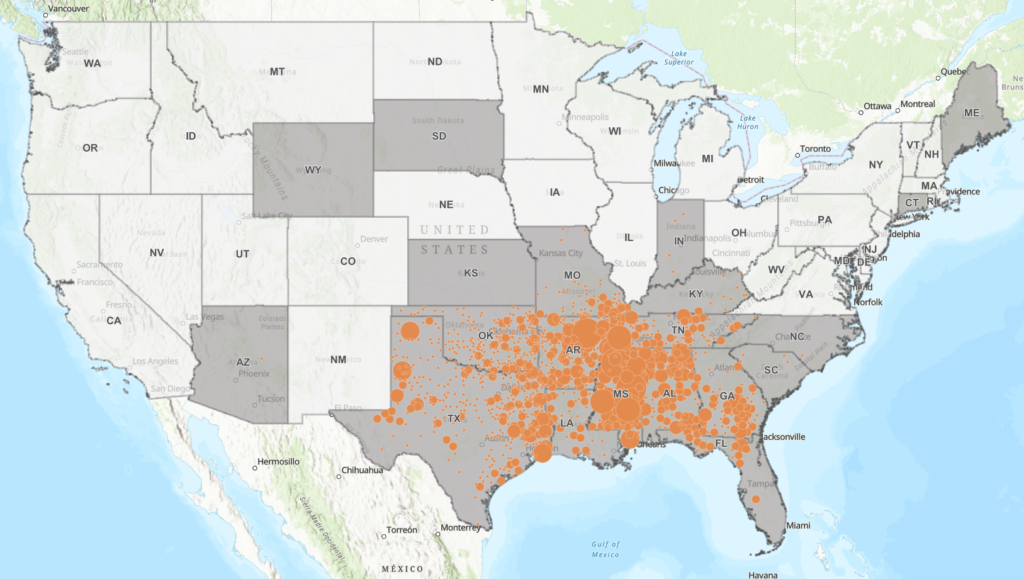
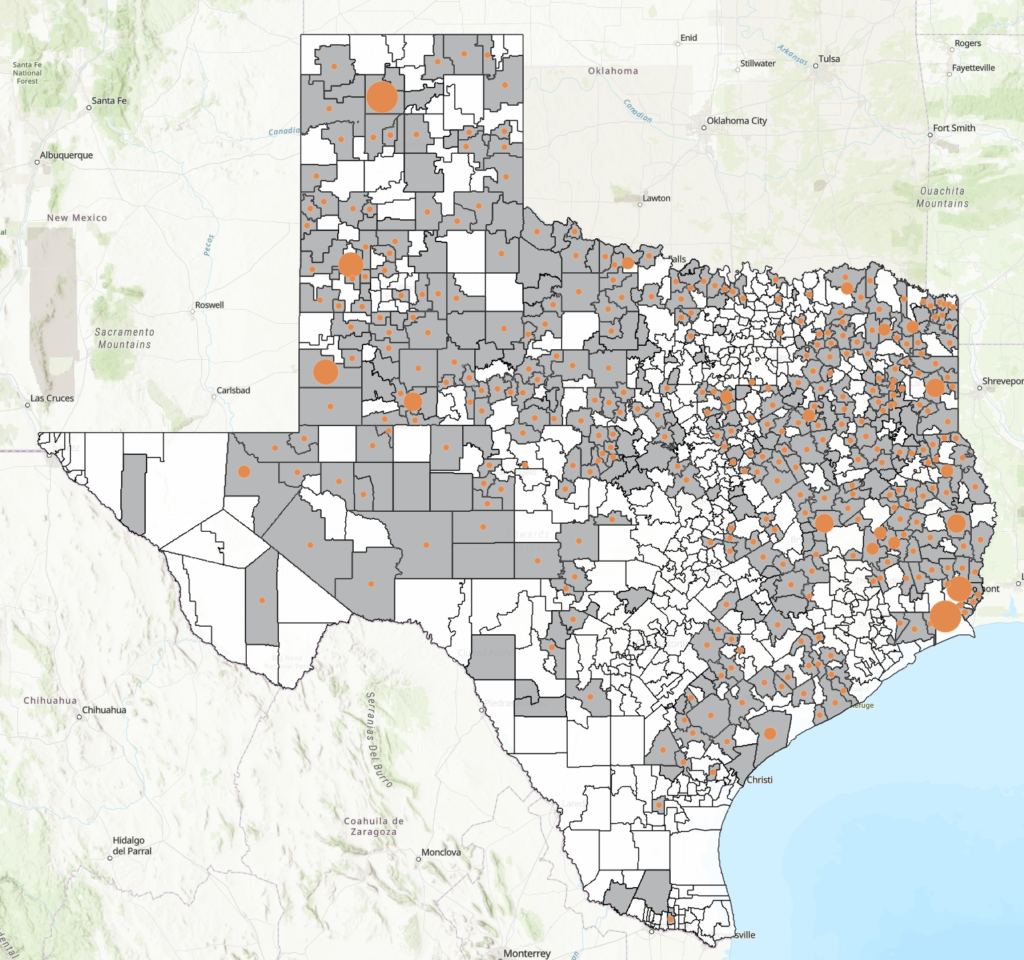
IDRA will continue to oppose corporal punishment in schools. We do this work alongside many organizations, schools, school districts and professional associations representing teachers, school administrators, doctors, mental and behavioral health professionals, faith-based communities, legal experts, families and students.
We urge you to join the growing community of advocates dedicated to ending corporal punishment in schools and ensuring that all children have access to excellent and equitable learning environments they deserve.
Take Action!
Speak Up!
Join advocates across the globe today to recognize the International Day to End Corporal Punishment of Children. Share on social media why we must end this harmful practice in schools.
Use the hashtag: #EndCorporalPunishment
Share Your Story!
Has corporal punishment affected your family? Share your story using our corporal punishment story collector.
Encourage your state and school district to ban corporal punishment!
Urge state leaders to ban corporal punishment in the law! School districts don’t have to wait for this to happen.
They can choose to end corporal punishment in their own schools. In our map above, you can see which districts have already done so.
FAQs
What is corporal punishment in schools?
Corporal punishment in schools is the deliberate infliction of physical pain, such as paddling, spanking or slapping, used as a form of discipline.
Is corporal punishment still legal in U.S. schools?
Yes. Corporal punishment is still legal in 20 U.S. states, though some school districts within those states have banned the practice.
Who is most affected by corporal punishment?
Black students, boys and students with disabilities are disproportionately subjected to corporal punishment in schools.
Does corporal punishment improve student behavior?
No. Research shows corporal punishment is ineffective and can increase behavioral challenges while harming students’ well-being.
What are alternatives to corporal punishment?
Schools can use restorative practices, relationship-building and culturally responsive approaches that support accountability while maintaining student dignity.